Google Updates Gemini 4 Models With New Pricing
Google's Gemini 4 models, including Carbon, Argon, and Hydrogen, have updated pricing and features. The changes may impact how users choose between the models.
Original reporting · simonwillison.net
Original: “llm-gemini 0.37”
Read “llm-gemini 0.37” at Simon Willison →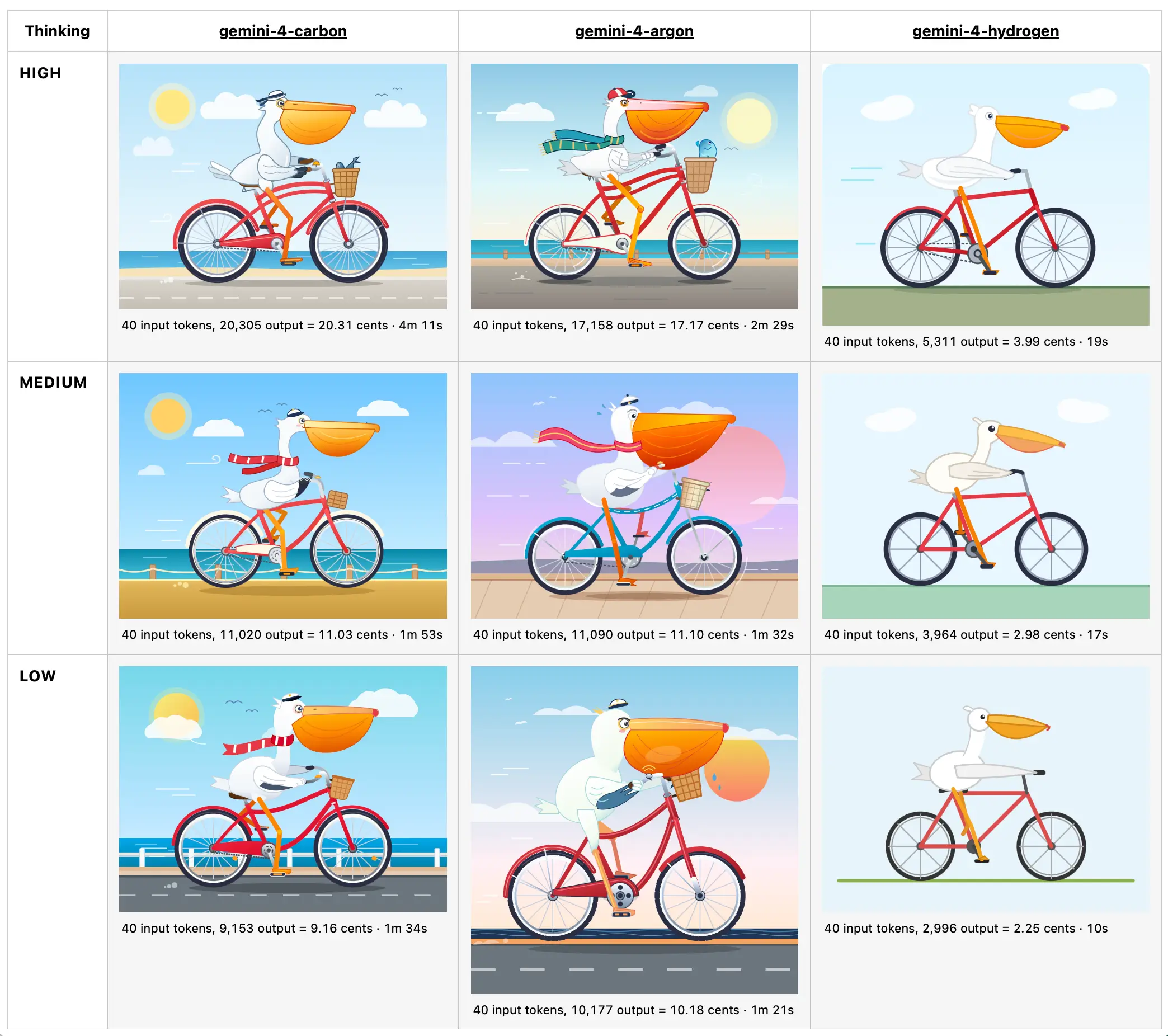
How this was written. GDS wrote this article with a language model from Simon Willison’s reporting (model: @cf/meta/llama-3.3-70b-instruct-fp8-fast); it describes that reporting rather than adding to it. The original, linked above, is the full story.
Key points from Simon Willison’s report
- Google's Gemini 4 models, including Carbon, Argon, and Hydrogen, have updated pricing and features.
- Argon offers faster responses and lower token spend per turn compared to Carbon, despite equal current pricing.
- Hydrogen is positioned as a cheaper model, but its price is still higher than other models like Claude Haiku 5.5 and GPT-6 Luna.
- Hydrogen will power AI features in Google Search as the new free tier model.
- The updates may impact user preferences and the broader AI landscape.
Google has announced updates to its Gemini 4 models, including Carbon, Argon, and Hydrogen, according to Simon Willison. The models are scheduled to undergo pricing changes on December 1st, which may affect user preferences. Currently, Carbon and Argon are priced the same, despite Argon delivering faster responses and lower token spend per turn.
The key difference between Carbon and Argon lies in their performance, with Argon offering improved efficiency. Google claims that Argon provides Gemini 4 intelligence with faster responses and lower token spend per turn compared to Carbon. This distinction may influence users to choose Argon over Carbon, despite their current equal pricing.
Hydrogen, positioned as the cheaper model, is currently only a 25% discount on its more capable peers. However, after December 1st, the price will represent a 75% discount, making it more competitive. In comparison to other models like Claude Haiku 5.5 and GPT-6 Luna, Hydrogen is still considerably more expensive, with a price 15 times higher.
A comparison of the three Gemini 4 models at their supported effort levels reveals notable differences in performance. The quality of generated images, such as pelicans, varies significantly between the models, with Hydrogen producing less impressive results despite its relatively high price. This disparity may lead users to opt for more capable models like Carbon or Argon.
Google describes Hydrogen's intended position as a fast and disciplined execution model for everyday work. It is designed to stand on its own or pair with Carbon and Argon in multi-model workflows. This positioning suggests that Hydrogen is geared towards users who require efficient and reliable performance for routine tasks.
As the new free tier model, Hydrogen will power AI features in Google Search. This integration may expand the reach and accessibility of AI-powered tools, making them more widely available to users. The implications of this development are significant, as it may lead to increased adoption and usage of AI features in search.
The updates to the Gemini 4 models and their pricing may have significant implications for users and the broader AI landscape. As the models continue to evolve, users will need to reassess their choices and consider the trade-offs between price, performance, and features. According to Simon Willison, these changes may shape the future of AI development and usage.
Questions and answers
What are the key differences between Carbon and Argon?
Argon delivers Gemini 4 intelligence with faster responses and lower token spend per turn compared to Carbon.
How does Hydrogen's price compare to other models?
Hydrogen is currently 15 times more expensive than models like Claude Haiku 5.5 and GPT-6 Luna.
What is Hydrogen's intended position in Google's mix of models?
Hydrogen is built to stand on its own as a model for everyday work or to pair with Carbon and Argon as the high-efficiency execution engine in multi-model workflows.