Nielsen Norman Group Explains Journey Mapping
Journey maps visualize a person's process to accomplish a goal, according to Nielsen Norman Group. This tool is essential for understanding user experiences.
Original reporting · nngroup.com
Original: “Journey Mapping 101”
Read “Journey Mapping 101” at Nielsen Norman Group →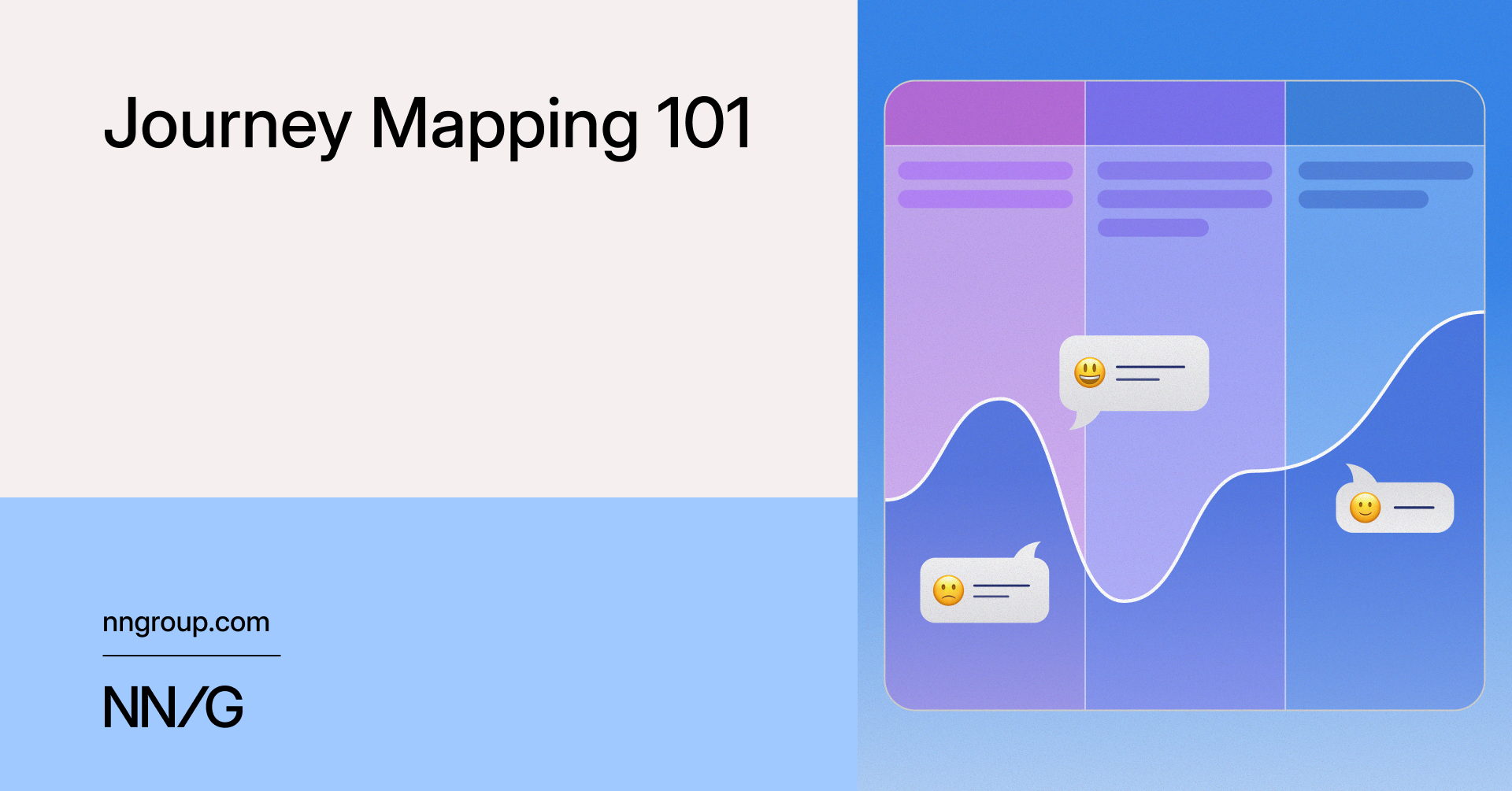
How this was written. GDS wrote this article with a language model from Nielsen Norman Group’s reporting (model: @cf/meta/llama-3.3-70b-instruct-fp8-fast); it describes that reporting rather than adding to it. The original, linked above, is the full story.
Key points from Nielsen Norman Group’s report
- Journey maps are a UX tool used to visualize a person's process to accomplish a goal
- Journey maps typically include five key elements: the actor, scenario and expectations, journey phases, actions and emotions, and opportunities for improvement
- Journey maps are best suited for scenarios that involve a sequence of events or steps
Nielsen Norman Group reported that journey maps are a common UX tool used to understand the process a person goes through to achieve a goal. They come in various formats and serve different purposes depending on the context. Journey maps are used to identify areas for improvement and create a better user experience.
Journey mapping typically starts by compiling a series of user actions into a timeline, then adds the user's thoughts and emotions to create a narrative of their experience. This narrative is refined into a journey map, which usually includes a specific user, scenario, and corresponding expectations or goals.
The journey map format often features high-level phases of the journey, along with the user's actions, thoughts, and emotions at each phase. Key takeaways, such as opportunities for improvement, are also included. Nielsen Norman Group notes that the terms used to describe journey maps can vary, but the content is what matters.
Journey maps typically include five key elements: the actor, scenario and expectations, journey phases, actions and emotions, and opportunities for improvement. The actor is the persona or user whose experience is being mapped, and their actions should be grounded in research data. Focusing on one actor per map creates a clear narrative.
Scenarios can be real or anticipated, and should be based on research data or clearly identified assumptions. Journey maps are best suited for scenarios that involve a sequence of events or steps, such as shopping or taking a trip. They can also span multiple channels, making them a useful tool for understanding complex user experiences.
Journey phases provide a structure for organizing the other elements of the journey map, such as actions and emotions. These phases vary by scenario, and organizations often have data to help identify the appropriate phases. Examples of journey phases include researching products, making a purchase, and seeking support.
Actions, mindsets, and emotions are captured throughout the journey, providing insight into what users do, think, and feel. This information is used to identify opportunities for improvement, which are actionable insights that highlight where and how the user experience can be improved.
Questions and answers
What is a journey map?
A journey map is a visualization of the process a person goes through to accomplish a goal, according to Nielsen Norman Group.
What are the key elements of a journey map?
The key elements of a journey map include the actor, scenario and expectations, journey phases, actions and emotions, and opportunities for improvement.
Why are journey maps useful?
Journey maps are useful for understanding user experiences and identifying areas for improvement, allowing organizations to create a better experience for their users.