llm-gemini 0.38
Google introduced the llm-gemini 0.38 plugin, a tool to access the Gemini family of models, amid pricing changes. The move aims to simplify access to the models, but pricing remains complex.
Original reporting · simonwillison.net
Read “llm-gemini 0.38” at Simon Willison →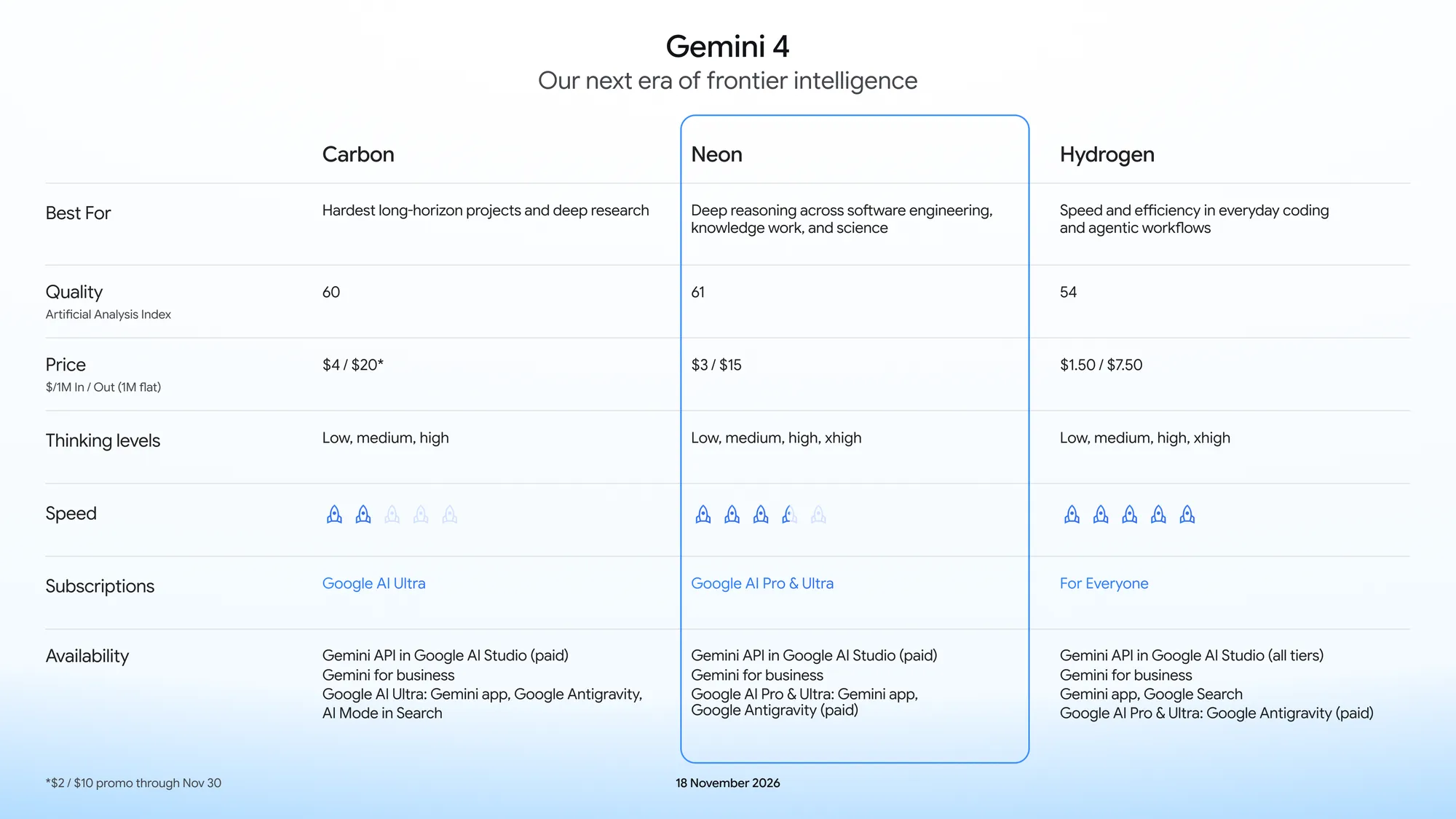
How this was written. GDS wrote this article with a language model from Simon Willison’s reporting (model: @cf/meta/llama-3.3-70b-instruct-fp8-fast); it describes that reporting rather than adding to it. The original, linked above, is the full story.
Key points from Simon Willison’s report
- Google has released the llm-gemini 0.38 plugin to access the Gemini family of models.
- The Gemini 4 lineup has been updated with the introduction of Neon, making the pricing structure more complex.
- The prices of the models are subject to change, with Carbon's price set to double on December 1st.
- The plugin may simplify access to the Gemini models, but the pricing remains complex.
- The release of the plugin is part of Google's efforts to provide tools for developers to work with the Gemini family of models.
Google has released the llm-gemini 0.38 plugin, according to Simon Willison. This plugin provides access to the Gemini family of models, which has recently undergone changes with the introduction of Gemini 4 Neon.
The Gemini 4 lineup initially consisted of Hydrogen, Argon, and Carbon models, with Argon and Carbon priced the same and Hydrogen at three-quarters of that price. However, the pricing is set to change on December 1st, when Argon and Carbon's prices will double, and Hydrogen's price will be one-quarter of the new price of the other two models.
The introduction of Neon has added complexity to the pricing, with the model lineup now consisting of Carbon, Neon, and Hydrogen, from most to least expensive. Currently, Carbon is half price, making Neon the most expensive option, followed by Carbon, and then Hydrogen.
The pricing for each model is as follows: Neon costs $3 per million input and $15 per million output, Carbon costs $2 per million input and $10 per million output, and Hydrogen costs $1.50 per million input and $7.50 per million output. These prices are subject to change, with Carbon's price set to double on December 1st.
The release of the llm-gemini 0.38 plugin may simplify access to the Gemini models, but the pricing structure remains complex. The plugin is part of Google's efforts to provide tools for developers to work with the Gemini family of models.
Simon Willison reported that the pricing for the Gemini 4 series was already confusing, and the introduction of Neon has made it even more complex. The new pricing structure may take some time to understand, especially with the upcoming price changes on December 1st.
The llm-gemini 0.38 plugin is the latest development in Google's Gemini family of models. As the pricing structure continues to evolve, developers may need to adapt to the changes to get the most out of the models.
Questions and answers
What is the llm-gemini 0.38 plugin?
The llm-gemini 0.38 plugin is a tool to access the Gemini family of models, according to Simon Willison.
How has the pricing of the Gemini 4 lineup changed?
The introduction of Neon has added complexity to the pricing, with the model lineup now consisting of Carbon, Neon, and Hydrogen, from most to least expensive.
What are the current prices of the Gemini models?
The current prices are: Neon costs $3 per million input and $15 per million output, Carbon costs $2 per million input and $10 per million output, and Hydrogen costs $1.50 per million input and $7.50 per million output.